If you've been shopping for a microbrand watch, you've almost certainly come across the name Miyota. It shows up on spec sheets from established independents to first-time brands, and it's the movement inside several of our own watches. But what exactly is a Miyota movement, why do so many watchmakers rely on it, and how do you tell which Miyota calibre is worth buying? This guide breaks it down.
What is Miyota?
Miyota is a movement manufacturer owned by Citizen Watch Co. — one of Japan's largest watchmaking groups. Based in Miyota-machi in Nagano Prefecture, the factory produces millions of movements a year across quartz, automatic, and specialty calibres.
Despite being less discussed than Swiss movement makers like ETA or Sellita, Miyota is arguably more influential measured by sheer volume. Its calibres power watches at every price point, from fashion watches under $100 to carefully finished microbrands in the $300–$1,000 range.
Why microbrand watchmakers use Miyota
When an independent watchmaker chooses a movement, they're balancing cost, availability, reliability, and serviceability. Miyota scores well on all four.
Cost: Swiss movements come at a significant premium. Putting a Swiss automatic in a watch under $500 often means the case, crystal, and finishing take a hit. A Miyota lets us spend more on the parts you actually see and touch.
Availability: Supply disruptions tend to hit Swiss movements harder than Japanese ones. Miyota's high production volume means consistent availability for small-batch producers — something we plan around carefully when scheduling production runs.
Reliability: Miyota automatics aren't chronometer-certified, but they're dependable daily-wear movements. The 9015 in particular is known for running within roughly ±10 seconds per day once it's been regulated — more than adequate for everyday use.
Serviceability: Any competent watchmaker in the world can service a Miyota. Parts are standardized and available, which matters more than people realise — a watch is only as good as your ability to maintain it over twenty years.
The most important Miyota calibres in 2026
Miyota 9015 — the microbrand staple
The 9015 is one of the most-used automatic movements in the microbrand world. It has 24 jewels, beats at 28,800 vibrations per hour (4 Hz), and supports both hacking seconds and hand-winding. At 3.9 mm thick it's slim enough for genuinely elegant automatic watches. Miyota's factory tolerance is -10 to +30 seconds per day, but in practice a well-regulated 9015 typically settles around ±10 seconds per day.
Its main quirk: the rotor can have a slight wobble visible through an exhibition caseback that purists sometimes note, and its automatic winding is unidirectional — an often-cited characteristic of the calibre. Functionally neither matters much; the watch stays wound fine with normal wrist activity.
Miyota 9039 — the refined, no-date sibling
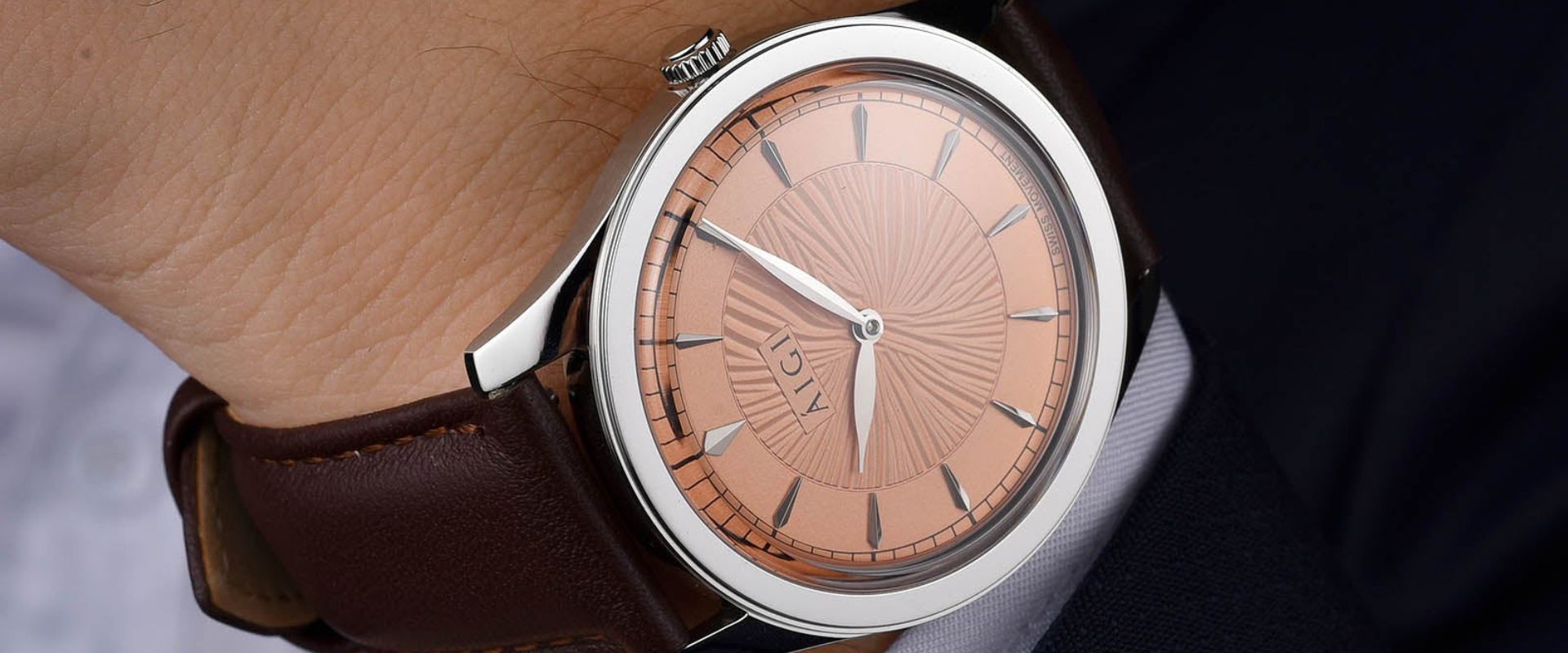
The 9039 sits in the same 9-series family: 24 jewels, 28,800 vph, hacking and hand-winding, and roughly a 42-hour power reserve. What sets it apart is the no-date configuration — a cleaner dial layout that many watchmakers choose when the design calls for symmetry. We use the 9039 in our Satellite Ground Station II (SGS II), a 39 mm automatic with a chemically hardened steel case and an exhibition caseback.
Miyota 8215 — the budget workhorse
Thicker and less refined than the 9015, but famously robust. The 8215 has 21 jewels, beats at 21,600 vph, and holds roughly a 42-hour power reserve. Its factory tolerance is wider, at -20 to +40 seconds per day. It supports manual winding but does not hack — the seconds hand keeps running when you set the time — and like the 9015 its automatic winding is unidirectional, so it's less efficient at staying wound than a bidirectional movement like the Seiko NH35. It's a sensible choice for entry-level watches where cost is the priority, and less suited to exhibition casebacks where movement finish matters.
Miyota 2115 — reliable analogue quartz
A workhorse three-hand quartz calibre with a date. Miyota rates its accuracy at about ±20 seconds per month, and it runs for roughly three years on an SR626SW cell. It's a no-fuss, low-maintenance movement — a common choice for affordable everyday watches where you want accurate time and long service intervals rather than a mechanical experience.
A note on Miyota's quartz chronographs (0S series)
You'll also see Miyota's 0S-series calibres — such as the 0S10 and 0S20 — in affordable chronographs. These are battery-powered quartz chronograph movements (not solar), rated at about ±20 seconds per month. They're what makes an inexpensive multi-subdial chronograph possible, and they're worth recognising for what they are: quartz, with the accuracy and low maintenance that implies.
Miyota vs. Seiko NH35 vs. Swiss movements
This is the comparison every buyer eventually makes.
Miyota 9015 vs. Seiko NH35: The NH35 runs at 21,600 vph against the 9015's 28,800 vph, so the 9015 has a slightly smoother seconds sweep and is a touch thinner. The NH35 is a little more robust and has an even deeper global service network. Both are solid, widely used choices. If you want a closer look at the Seiko side, see our Seiko NH35 reference.
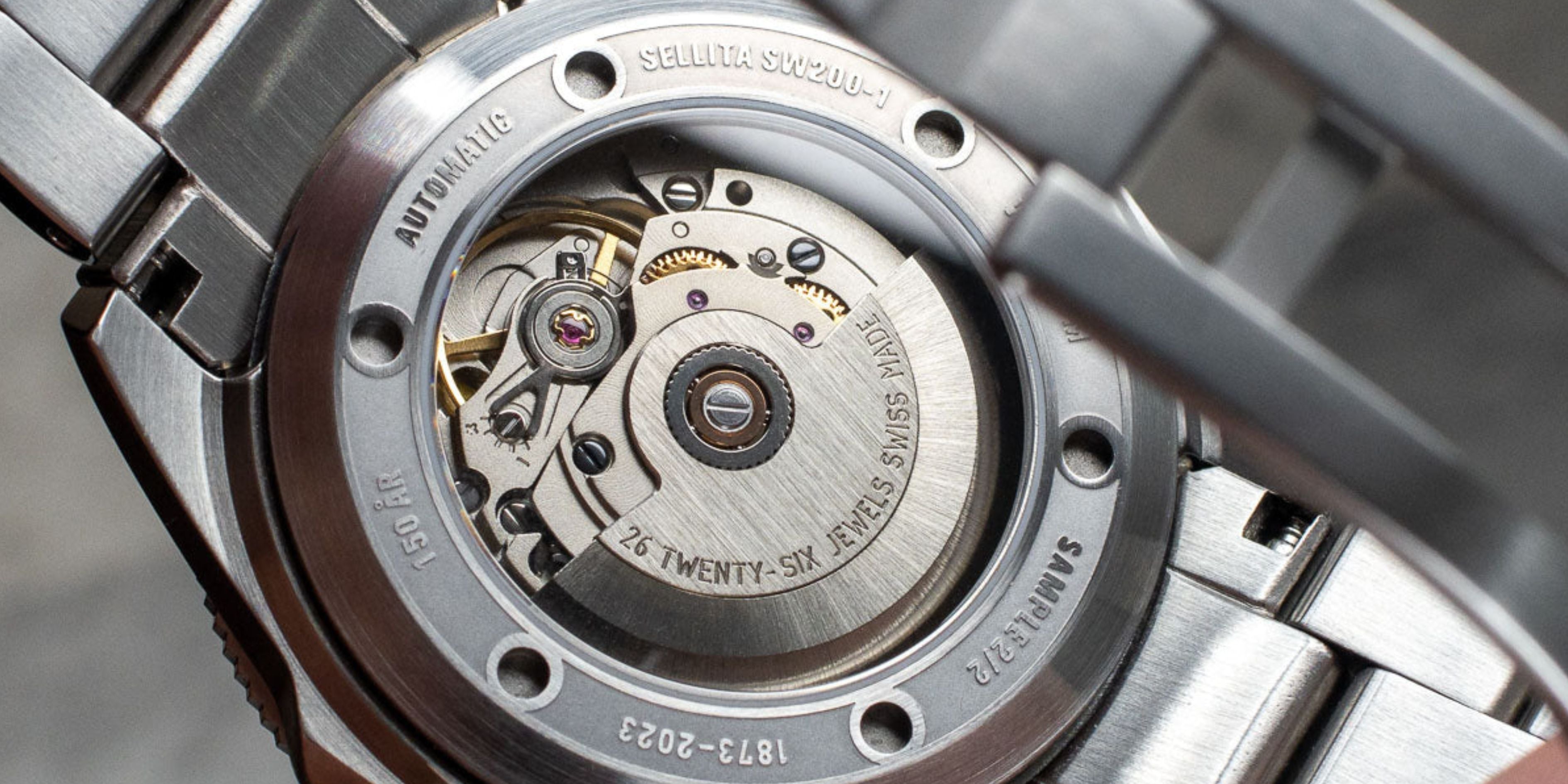
Miyota 9015 vs. Swiss (ETA / Sellita): The ETA 2824 is one of the most famous Swiss automatics ever made, but ETA movements are rarely available to independent watchmakers today, since supply is largely reserved for brands within the Swatch Group. Most microbrands comparing themselves to "the 2824" are actually using the Sellita SW200-1, a Swiss movement built on the same architecture. In core function the Miyota 9015 is very comparable — same beat rate, hacking, hand-winding — but Swiss calibres often stand apart in finishing and multi-position regulation, and cost meaningfully more at movement level. We dig into that distinction in Swiss parts vs. Swiss made. For most microbrand watches in the $300–$800 range, Miyota strikes a strong balance of reliability, accuracy, and value.
Which of our watches use Miyota
We choose movements based on each watch's intended use — not on what looks impressive on a spec sheet. Founded above the Arctic Circle in Norway in 2017, we mix Swiss and Japanese calibres depending on the design.
The Satellite Ground Station II (SGS II) runs the Miyota 9039 automatic — 42-hour power reserve, no-date layout, exhibition caseback — paired with a chemically hardened steel case and sapphire crystal front and back. Our ladies' quartz collections (Nordlys, Glacier, Polar Night and others) use Citizen-Miyota quartz movements: slim, accurate, and virtually maintenance-free, in 32 mm, 36 mm and 40 mm cases. For our flagship men's automatics we go elsewhere in the parts bin — the Gruvebus uses a Swiss Sellita SW200-1, and the Arctic GMT uses the Seiko NH34A. For organisations and teams, we also take on custom dial projects built on these movements.
What to look for when buying a Miyota watch
- Check which calibre. The gap between a 2115, an 8215 and a 9015 is significant. Ask, or read the spec sheet.
- Exhibition caseback? If the movement is on show, the 9015 looks better than the 8215 — make sure the case finishing matches what's inside.
- Rotor noise. Some Miyota rotors are louder than Swiss equivalents. It's a characteristic, not a defect.
- Service access. Confirm the brand offers servicing, or that an independent watchmaker near you handles Miyota calibres (most do).
For the wider buyer's-side view, our microbrand watches guide covers what actually makes one worth owning, and if you're specifically after a travelling GMT, our Miyota 9075 deep-dive covers that calibre in detail.
Final thoughts
A Miyota watch isn't a compromise — it's a deliberate choice. Using Miyota lets a brand put the budget where you actually benefit: the case, the dial, the finishing, the crystal. If you're evaluating a microbrand watch and it runs a Miyota 9015 or 9039, that's a green flag, not a red one.
Frequently Asked Questions
Are Miyota movements good?
Yes. Miyota automatics are dependable, easy to service worldwide, and offered at every price point. The 9015 and 9039 are widely used in respected microbrand watches and typically run within about ±10 seconds per day once regulated. They aren't chronometer-certified, but for daily wear they're more than accurate enough.
What is the difference between the Miyota 9015 and 8215?
The 9015 is Miyota's premium automatic: 28,800 vph, 24 jewels, hacking seconds, hand-winding, and a slim 3.9 mm profile. The 8215 is the budget workhorse: 21,600 vph, 21 jewels, no hacking seconds, and a thicker case. The 9015 is smoother and better suited to exhibition casebacks; the 8215 is cheaper and extremely robust.
Is a Miyota movement better than a Seiko NH35?
Neither is clearly "better" — they're close competitors. The Miyota 9015 beats faster (28,800 vs 21,600 vph) for a smoother sweep and is slightly thinner; the Seiko NH35 is a little more rugged and has an even deeper service network. Both are excellent, widely used automatic movements in the microbrand space.
How accurate is the Miyota 9015?
Miyota's factory tolerance for the 9015 is -10 to +30 seconds per day. In practice, a properly regulated example usually settles around ±10 seconds per day, and well-regulated watches can do better. Real-world accuracy varies with wrist activity, resting position, and temperature.
Do Miyota watches hold their value?
Movement choice isn't the main driver of resale value — brand, condition, and demand matter far more. That said, a Miyota calibre keeps ownership costs low because servicing is affordable and available almost anywhere, which makes the watch easier to live with and to pass on in good running order.