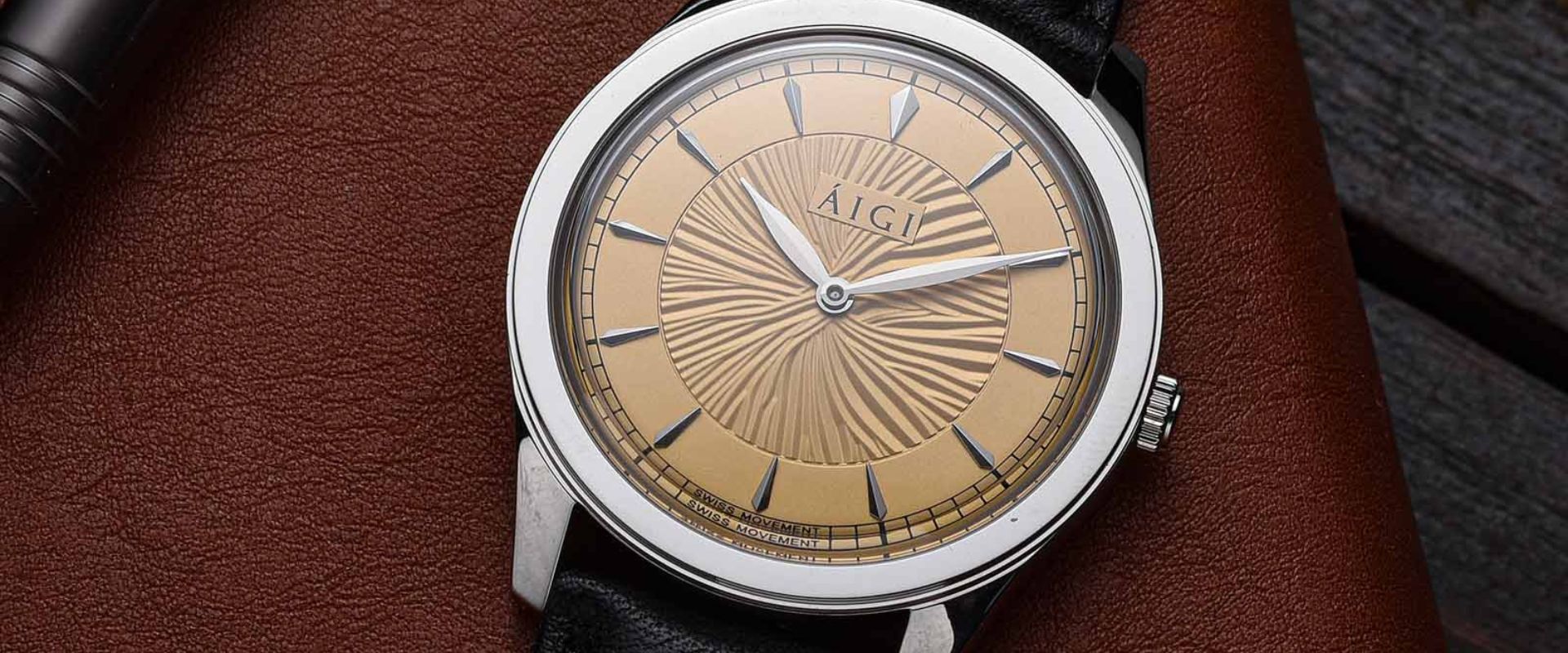
Last week a customer emailed us after receiving his Gruvebus: "It's running about 5 seconds fast per day — is that normal?" Yes. Completely normal. In fact, that's good performance for an unregulated Swiss automatic. But we understand the concern — if you're coming from quartz or a smartphone, any drift at all feels wrong.
This guide covers what accuracy actually means for an automatic watch, what numbers you should expect, and what you can do about it.
What does "accurate" mean for an automatic watch?
Accuracy in mechanical watchmaking is measured in seconds gained or lost per day. A watch rated at "±10 seconds per day" might lose 10 seconds, gain 10, or land anywhere in between over a 24-hour period. Some days it'll be dead-on. Others it'll drift a few seconds.
For most production automatic movements — the kind in our watches and most other microbrands — you should expect somewhere between -10 and +15 seconds per day. That's the realistic range. COSC-certified chronometers tighten this to -4 to +6 seconds per day, but that involves additional testing and regulation that adds cost.
For comparison: a quartz watch holds about ±15 seconds per month. The gap is real, and it's worth understanding why.
Why automatic watches drift
An automatic movement is a mechanical system — hundreds of tiny components transferring energy through gears, springs, and levers. Several things introduce variation.
Position matters more than people think. Leave your watch dial-up on a nightstand overnight, and gravity affects the hairspring and balance wheel differently than when it's on your wrist. Different positions produce different rates. This is why the same watch can gain 3 seconds one day and lose 2 the next — your wearing habits change how gravity interacts with the movement.
Power reserve and spring tension. A freshly wound mainspring delivers slightly more energy than one running low. Most automatic movements are more accurate in the middle of their power reserve curve. In practice, wearing the watch daily keeps the spring in its optimal range.
Temperature and magnetism. Oil viscosity changes with temperature. Cold makes it thicker; heat makes it thinner. Both affect friction in the escapement. Magnetism is the more common culprit these days — a phone left next to a watch overnight, a magnetic bag clasp, a laptop speaker. If your watch suddenly gains 30+ seconds per day, magnetism is the first thing to check.
None of these are defects. They're the physics of mechanical timekeeping — the same physics that have applied since the balance spring was invented in the 1600s.
How does this compare to other watch types?
Quartz: ±15 seconds per month. The crystal oscillator is electrically stable and barely affected by position or temperature. If raw accuracy is your only priority, quartz wins.
Automatic: -10 to +20 seconds per day (unregulated). The trade-off is mechanical engagement — a movement powered by your motion, with no battery to replace.
Mecha-quartz: Quartz accuracy with a mechanical chronograph. We use a Seiko VK64 in the Arctic Chrono II for exactly this reason — precise timekeeping with the tactile satisfaction of a mechanical pushpiece.
Most collectors own both quartz and automatic watches. They serve different purposes.
How accurate are the movements we use?
We work with three automatic movements across our lineup. Here's what we see in practice — not spec-sheet claims, but real-world performance based on production testing and customer feedback.
Sellita SW200-1 (in Gruvebus): 28,800 vibrations per hour, 26 jewels, 38-hour power reserve. Typical accuracy: ±5–10 seconds per day. The higher beat rate helps — more oscillations per hour means the movement averages out micro-disturbances more effectively. This is a Swiss movement with wide serviceability.
Seiko NH34A (in Arctic GMT): 21,600 vph, 24 jewels, 41-hour power reserve. Typical accuracy: ±10–15 seconds per day. The lower beat rate makes it slightly less precise on paper, but in daily wear the difference is smaller than the specs suggest. Where NH34A stands out is durability — it's a workhorse built for volume and consistency.
Miyota 9039 (in Satellite Ground Station II): 28,800 vph, 24 jewels, 42-hour power reserve. Typical accuracy: ±5–12 seconds per day. Shares the same beat rate as the Sellita and delivers comparable precision. The longest power reserve in our automatic lineup.
All three are proven movements with decades of production history behind them. We chose each one for a specific watch and a specific use case — not because one is "better" than another.
How to get the best accuracy from your automatic watch
Wear it consistently. A watch worn daily stays in its optimal power reserve range and the movement settles into a rhythm. Watches left in drawers for days tend to show more variance when you pick them up again.
Have it regulated. This is the single most effective thing you can do. A watchmaker adjusts the balance wheel regulator to bring your specific watch closer to zero deviation. It typically costs $50–150 and can tighten accuracy to ±3–5 seconds per day. We've had customers report near-chronometer performance from regulated Gruvebus watches.
Track your rate. Check your watch against your phone at the same time each morning for a week. You'll see a pattern — most watches are consistently fast or consistently slow by a predictable amount. Once you know your watch's rate, you can adjust for it. A watch that's reliably +6 seconds per day is more useful than one that randomly drifts ±15.
Keep magnets away. This bears repeating: smartphones, wireless chargers, magnetic clasps, and speaker magnets can all affect your movement. Store your watch at least 10–15 cm from these sources. If you suspect magnetism, any watchmaker can demagnetize it in seconds.
Setting realistic expectations
If you're coming from a quartz watch or a smartwatch, any drift at all can feel like a problem. It isn't. An automatic watch telling time within 10 seconds per day is doing its job well. Over the course of a week, that's roughly a minute — noticeable if you're checking, but irrelevant for most real-world timekeeping.
The value of an automatic watch isn't atomic precision. It's wearing a mechanical system on your wrist that works because of physics and craftsmanship — not a battery. Every time you glance at the sweeping seconds hand, you're looking at 200+ years of horological engineering in motion.
We build our watches with that perspective. Honest movements, honest accuracy, honest expectations.
FAQ
Is -10 seconds per day acceptable for an automatic watch?
Yes, completely. -10 seconds per day means your watch loses about 5 minutes per month. That's well within the normal range for an unregulated automatic movement. If consistency bothers you, a watchmaker can regulate it tighter for relatively little cost.
Why is my automatic watch suddenly running fast?
The most common cause is magnetism. If your watch was keeping steady time and suddenly gains 20–30+ seconds per day, it's likely been exposed to a magnetic source — a phone, wireless charger, or magnetic clasp. A watchmaker can demagnetize it in seconds and it'll return to normal.
Can I improve my automatic watch's accuracy without sending it to a watchmaker?
To a degree. Wearing it consistently keeps the mainspring in its optimal range. You can also experiment with position overnight — some watches run slightly fast dial-up and slightly slow crown-down. Finding the right resting position for your specific watch can offset daily drift. But for significant improvement, professional regulation is worth the investment.
How accurate is the Sellita SW200-1 in the ÁIGI Gruvebus?
In normal wearing conditions, the Gruvebus typically runs within ±5–10 seconds per day. The Sellita SW200-1's 28,800 vph beat rate contributes to this — higher frequency movements tend to average out disturbances more effectively. Several customers have had their Gruvebus regulated to within ±3–5 seconds per day.
Does the brand of the movement matter for accuracy?
The specific caliber matters more than the brand. Swiss movements like Sellita SW200-1 and Japanese movements like Seiko NH34A and Miyota 9039 are all refined through decades of mass production across thousands of watches. They have established track records. We use all three in different models because each serves a specific purpose — not because one brand is inherently superior.