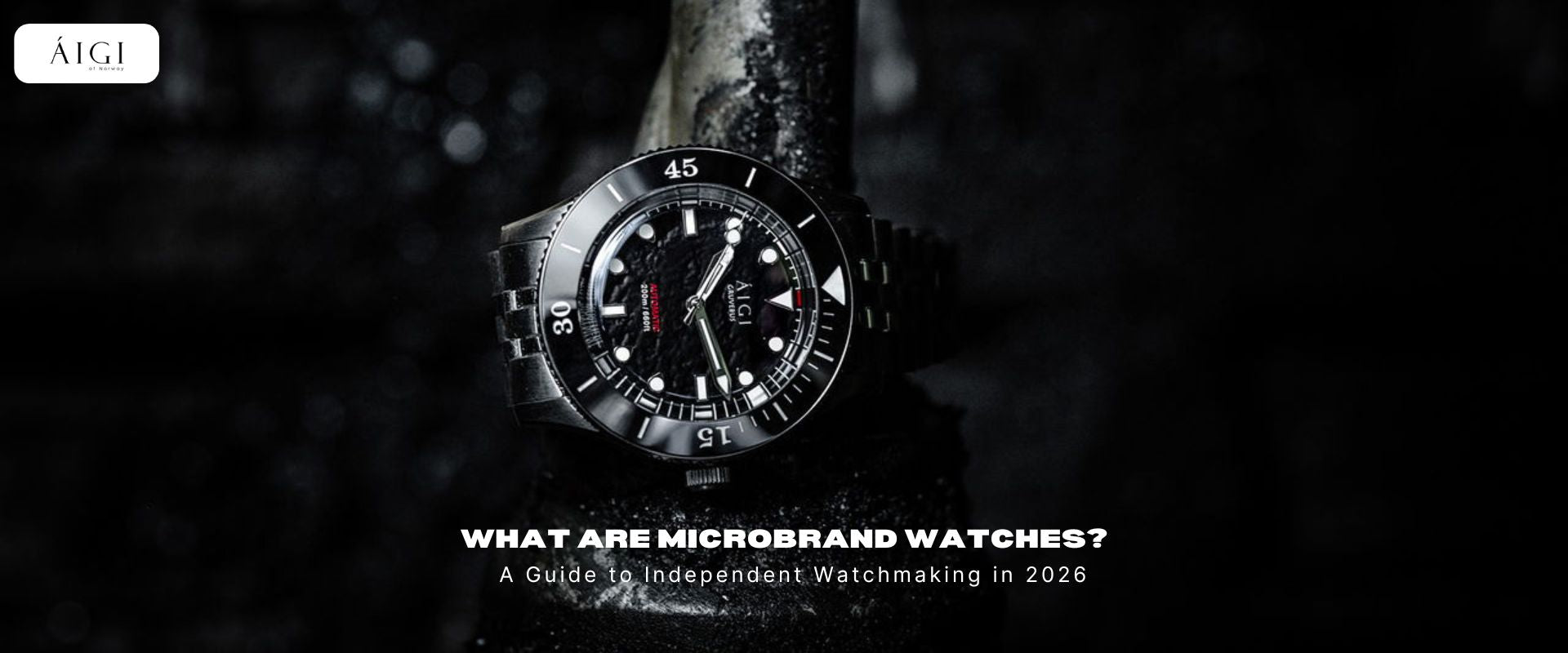
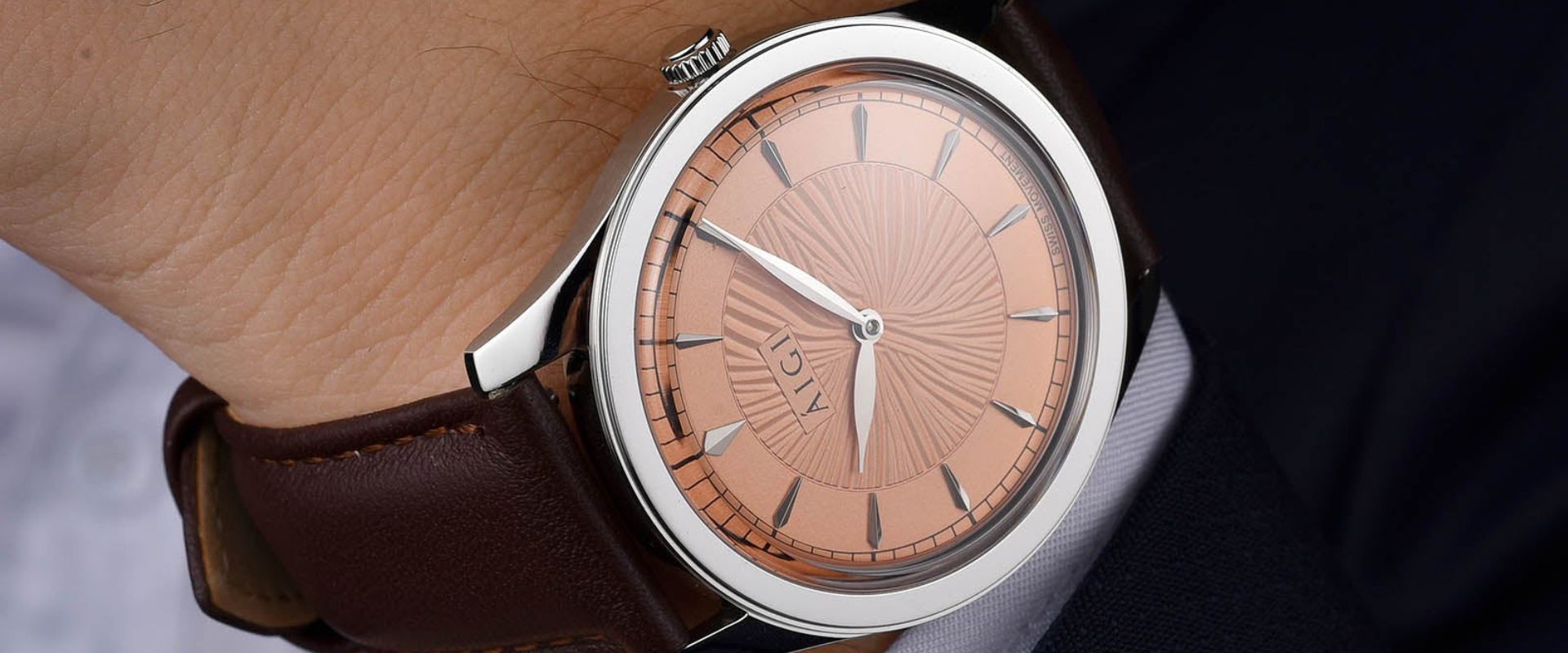
When we sat down to choose the movement for Gruvebus, we already had experience with three other calibres in our lineup. We knew what Seiko NH35A and NH34A delivered in our Arctic models, and what Miyota 9039 brought to the Satellite Ground Station II.
Gruvebus needed something different — a Swiss automatic that could serve as the workhorse of the collection.
We landed on the Sellita SW200-1. In this guide, we explain why, what the movement actually does, and how it performs in everyday use.
What Is the Sellita SW200-1?
Sellita Watch Group has been manufacturing movements in Switzerland for over 80 years. The SW200-1 is their most widely used automatic calibre, found in watches from hundreds of brands — from microbrands like us to established Swiss houses.
Here’s what you need to know about the specifications:
- 26 jewels — synthetic rubies that reduce friction at key contact points in the movement, helping extend service intervals.
- 28,800 vibrations per hour — the balance wheel oscillates 8 times per second, resulting in a smoother seconds hand and better conditions for precise regulation.
- 38-hour power reserve — take the watch off Friday evening, and it will still be running Sunday morning. For most people, that’s enough for a weekend.
- Hacking function — the seconds hand stops when you pull out the crown, allowing you to set the time precisely to the second.
After working with hundreds of Sellita movements in production, our experience is that this is a predictable and reliable calibre. Most watchmakers in Norway are very familiar with it, and spare parts are widely available.
How Does Sellita Compare to Other Automatic Movements?
We use three different movements across our lineup, which gives us a solid basis for comparison.
Sellita SW200-1 vs Seiko NH35A
The NH35A is used in the Arctic Diver and is a robust, workhorse movement. It runs at 21,600 vibrations per hour — lower than Sellita — has 24 jewels, and offers a 41-hour power reserve.
In daily use, the main difference shows up in accuracy. The NH35A typically runs at ±10–15 seconds per day, while the Sellita usually stays closer to ±5–10 seconds. For most people the difference isn’t dramatic, but over a week it adds up.
Where the NH35A wins is power reserve — about three hours more than the Sellita. If you rotate between multiple watches, that can be useful.
Sellita SW200-1 vs Miyota 9039
We use the Miyota 9039 in the Satellite Ground Station II. It has 24 jewels, runs at 28,800 vibrations per hour, and offers a 42-hour power reserve — quite close to the Sellita on paper.
In practice, both deliver stable and consistent performance. The Miyota has a slightly longer power reserve and is an excellent Japanese premium calibre.
The choice between Sellita and Miyota isn’t about better or worse — it’s about character. Sellita is Swiss, with all that implies in terms of tradition and service accessibility in Europe. Miyota represents Japanese precision engineering. Both are modern, reliable, and well-suited to the watches they power.
What About the ETA 2824?
The ETA 2824 is the classic reference movement that Sellita is often compared to. They share the same design architecture, and performance is nearly identical.
Today, ETA movements are largely unavailable to independent brands, as production is prioritized for Swatch Group companies. The Sellita SW200-1 fills the same role, and most watchmakers treat the two as functionally equivalent when it comes to servicing.
Maintenance in Practice
An automatic movement requires less maintenance than many people think. We rarely see issues with the SW200-1 unless the watch has been exposed to strong shocks or prolonged moisture.
Wear the watch.
It sounds obvious, but the best thing you can do for an automatic movement is to wear it. Your movement keeps the mainspring wound. If the watch stops, there’s no issue — just set it and start wearing it again.
Service every 3–5 years.
A full service includes disassembly, cleaning, and re-lubrication. This is a standard procedure offered by most watchmakers. Signs that service is due include increased deviation (more than ~20 seconds per day) or noticeably reduced power reserve.
Avoid strong magnetic fields.
Inductive chargers, magnetic clasps, speakers — prolonged exposure can affect accuracy. If the watch suddenly runs significantly fast, magnetization is a likely cause. A watchmaker can fix this in seconds.
Water is rarely a problem.
Gruvebus has 20 ATM water resistance with a screw-down crown, meaning you can swim and snorkel with it without concern. What we recommend avoiding is prolonged exposure to hot water (sauna, long showers), as temperature differences can temporarily affect the seals.
Why We Chose Sellita for Gruvebus
Gruvebus is inspired by the miners of Svalbard — people who needed equipment they could rely on in demanding conditions.
That set the standard for the movement: reliable, serviceable, and precise enough for everyday use.
The Sellita SW200-1 delivers on all three. The 28,800 frequency supports good accuracy, the 38-hour power reserve covers a typical weekend, and because it’s one of the most widely used Swiss calibres, almost any competent watchmaker can service it.
At 11,995 NOK, Gruvebus offers a Swiss automatic movement in a watch built with coal from Svalbard in the steel process, sapphire crystal, 200m water resistance, and tritium illumination.
It’s a lot of watch for the money — without needing to overstate it.
Is the Sellita SW200-1 Worth It?
In short: yes.
It’s not the most exotic movement, and it doesn’t try to be. It’s a proven Swiss calibre with decades of production history, broad service support, and performance that remains stable over years of daily use.
For us, it was a natural choice.
Gruvebus is a watch meant to be worn — not stored away. The Sellita SW200-1 fits that philosophy.
FAQ
Is Sellita SW200-1 better than Seiko NH35?
It depends on what you prioritize. Sellita runs at a higher frequency (28,800 vs 21,600 vibrations per hour) and is typically more accurate in daily use (±5–10 vs ±10–15 seconds per day). The NH35A offers a longer power reserve (41 vs 38 hours) and comes at a lower cost. Both are proven and reliable movements.
How often does a Sellita SW200-1 need servicing?
Recommended service intervals are every 3–5 years. In practice, many movements run well for 5–7 years, but lubrication degrades over time. Signs that service is needed include increased deviation, reduced power reserve, or unusual noises.
Can a watchmaker in Norway service a Sellita?
Yes. The SW200-1 is one of the most widely used Swiss movements, and most competent watchmakers are familiar with it. Spare parts are widely available.
How does Sellita SW200-1 compare to ETA 2824?
They are nearly identical in construction and performance. ETA is largely unavailable to independent brands today, making Sellita the practical alternative. Most watchmakers treat them as equivalent.
Is the Sellita movement in Gruvebus water-resistant?
Gruvebus is rated to 20 ATM with a screw-down crown, meaning it is suitable for swimming and snorkeling. The movement itself handles this without issue. Avoid prolonged exposure to hot water, as temperature changes can affect gasket performance.