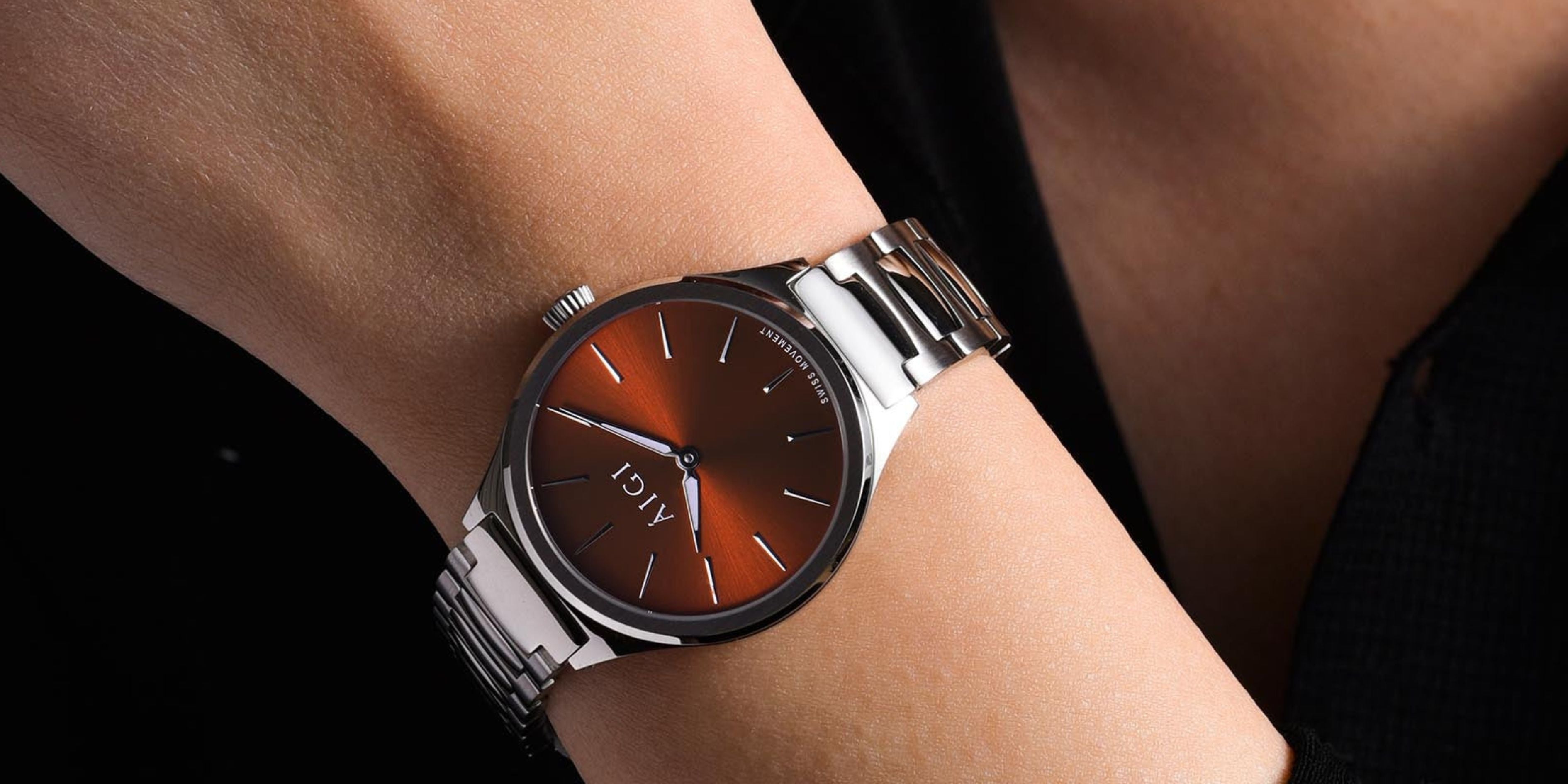
Put a 32 mm watch and a 36 mm watch side by side on the same wrist and the difference looks bigger than four millimetres. The smaller one sits inside the edges of the wrist; the larger one starts to reach for them. That small comparison explains most of what is happening with stylish watches for women in 2026 — less noise, better proportions, and watches chosen to be worn every day rather than once a season.
We design our watches in Norway, and the women's pieces in our collection were drawn with that everyday use in mind. Below is what we see shaping women's watches right now, what is worth following, and what is simply fashion.
What are the women's watch trends in 2026?
Three directions stand out: smaller cases, shaped cases such as rectangles, and calm, textured dials instead of busy ones. None of them is brand new. They are a return to proportions that dominated watchmaking for decades before oversized watches took over.
Fashion and watch writers have been pointing to the shift for a while. Retailers report more interest in sub-40 mm watches, and watches in the 32–36 mm range have become a common choice again. Rectangular watches in the tradition of the classic tank shape are getting renewed attention from buyers who want something refined rather than sporty.
It is worth being honest about one thing: not everyone agrees the small-watch wave will last. Some industry commentators expect case sizes to creep back up. That is exactly why we would not buy a watch because it is "on trend". Buy it because the proportions suit your wrist — then it stays right whatever the trend reports say next year.
Why are smaller watches back in style?
Partly nostalgia, partly practicality. A smaller case slips under a shirt or knit cuff, weighs less over a long day, and pairs more easily with jewellery. Mid-century watches were small by today's standards, and that vintage look is a big part of the current appeal.
For reference, women's watches typically range from about 26 mm to 36 mm in case diameter, according to the size guides published by both Citizen and Watches of Switzerland. Within that range:
- 26–30 mm reads as delicate and jewellery-like.
- 32–34 mm is the versatile middle — visible, but never dominant.
- 36 mm gives a more modern, slightly bolder presence.
Case diameter is only half the story. The distance from lug tip to lug tip decides whether a watch overhangs a slim wrist, and thickness decides whether it fits under a sleeve. In practice, we see more people return a watch because it sat too tall than because the diameter was wrong.
Rectangular watches: a shape that has never really left
Round cases are the default, so a rectangle immediately looks considered. It also tends to wear smaller than its numbers suggest, because the narrow width follows the line of the wrist.
Our rectangular watches measure 24 × 31 mm and are 6.4 mm thick, with a Miyota quartz movement, sapphire crystal and quick-release straps. We kept the case slim on purpose: a rectangular watch should sit flat, like a piece of jewellery, not stand up from the wrist.
Dials: texture over decoration
The dials getting the most attention this year are quiet ones — sunburst finishes that change with the light, soft colours, and clean indices without clutter. Colour is still very much alive in watchmaking, but the most wearable versions are muted rather than loud.
Light matters more than people expect. Where we come from, winter daylight is low and blue and summer light barely sets. A sunburst dial that looks flat in a shop can come alive at a window in February. When you choose a dial, look at it in daylight as well as under shop lighting if you can.
Quartz or automatic — which movement suits a women's watch?
Most slim women's watches use a quartz movement, and there are good reasons for that. Quartz movements are compact, which makes thin cases easier to build, and they keep accurate time with very little maintenance. If you want to understand how they work, our guide on how a quartz watch works explains the crystal, the circuit and the stepper motor in plain terms.
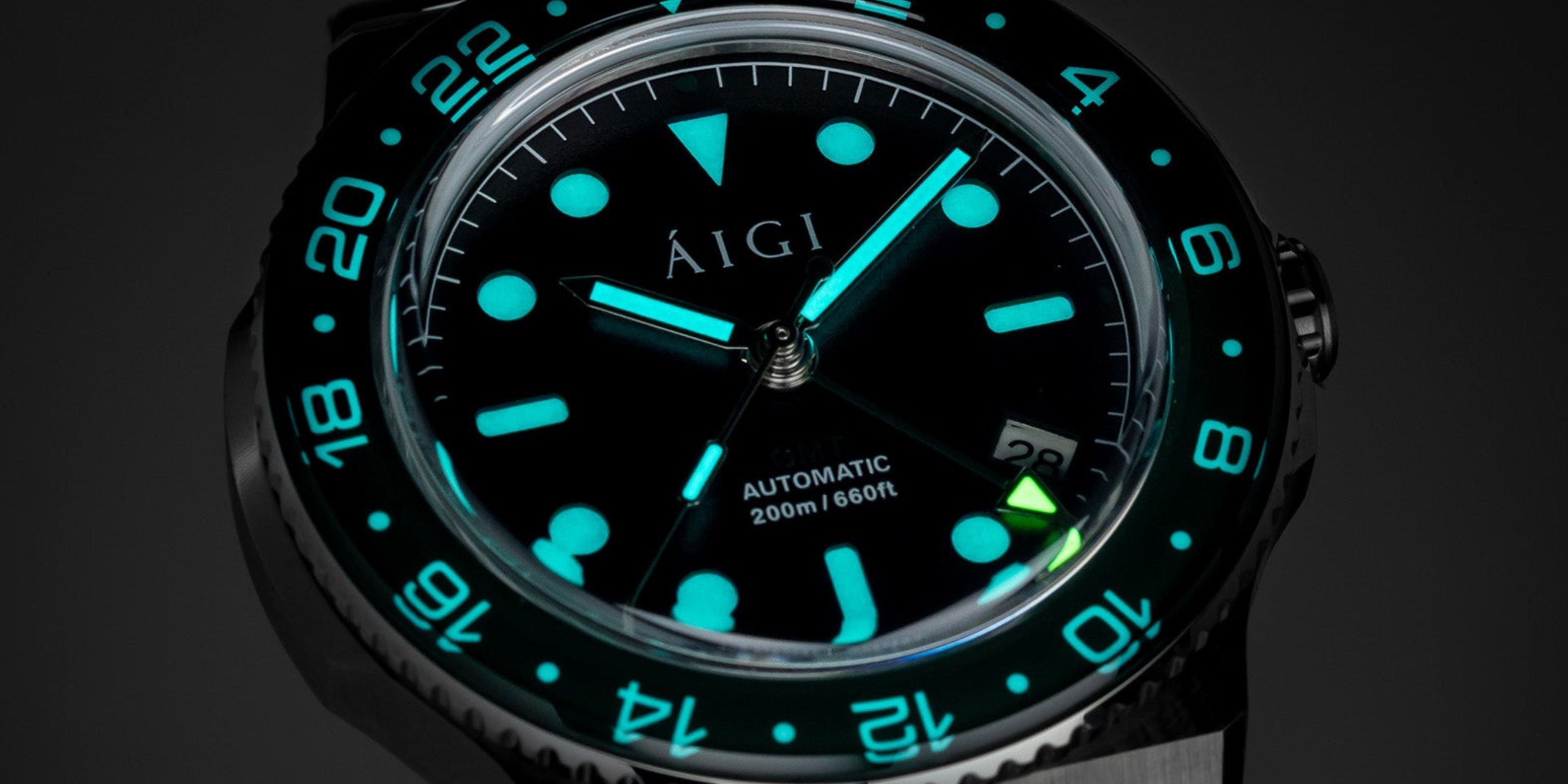
Battery life varies more than many buyers realise. Standard quartz calibres typically need a new cell every few years, while long-life Swiss calibres are built to go much further. The Ronda 762, for example, is rated for around 10 years on one battery because its motor steps every 20 seconds instead of every second. Our Swiss 32mm watches are powered by a Swiss-made Ronda quartz movement, and their hands carry Swiss Super-LumiNova so the time stays readable in the dark. You can read more about the movement family in our guide to Swiss Ronda movements.
An automatic watch is a different experience — a living mechanism you wind by wearing it. It is the right choice if that appeals to you, but it is usually thicker and needs a service every few years. Neither is better. They answer different questions.
Straps that change the whole look
The strap does more to a watch's character than almost anything else. A steel bracelet looks polished and works with everything; leather adds warmth; a mesh bracelet sits somewhere in between.
Quick-release spring bars make it practical to own one watch and several straps. A small lever on the bar lets you remove and fit a strap by hand, without the spring-bar tool a standard strap needs. We see many customers buy a second strap within a few months — it is the cheapest way to make one watch feel like two. If you are new to it, our step-by-step guide to changing a watch strap covers both types, and the leather strap guide explains what separates a good strap from a cheap one.
Quality details that outlast any trend
Trends change; materials decide how a watch looks in five years. Two details are worth checking on any watch you consider:
- Sapphire crystal. Sapphire rates 9 on the Mohs hardness scale — clearly harder than ordinary mineral glass — so everyday scratches are far less likely. We use it across our collection — the reasons are in our post on why we use sapphire crystal.
- Honest water resistance. A 5 ATM (50 m) rating comes from a static pressure test, not a diving depth. It handles rain, hand-washing and a short swim, but not diving or high-pressure water.
How to choose: a short summary
Start with your wrist, not the trend list. Pick a case size that sits within the edges of your wrist, a thickness that suits your sleeves, and a dial you like in daylight. Choose quartz for slim, low-maintenance everyday wear, or automatic if you want a mechanism you can feel. Then let the strap do the styling. For a broader, step-by-step approach, see our women's watch buying guide, or browse our full women's collection.
Frequently Asked Questions
What size watch is in style for women in 2026?
Smaller cases are popular again, and many women are choosing compact sizes. Size guides from major retailers put typical women's watches at roughly 26–36 mm in diameter. The right size still depends on your wrist: the watch should sit within its edges without the lugs overhanging.
Are rectangular watches still stylish for women?
Yes. Rectangular watches have a long history and are seeing renewed interest from buyers who prefer refined, vintage-inspired shapes over sporty designs. Because the narrow case follows the line of the wrist, a rectangular watch often wears smaller and sits flatter than a round watch of similar size.
Is a quartz watch a good choice for a stylish women's watch?
Quartz is the most common choice for slim women's watches because the movement is compact, accurate and needs little maintenance. Battery life depends on the calibre: long-life Swiss movements such as the Ronda 762 are rated for around 10 years on one battery, while many standard quartz movements need a new cell after a few years.
Can I swim with a 5 ATM women's watch?
A 5 ATM rating means the watch passed a static pressure test equivalent to 50 metres; it does not mean you can dive to that depth. It is suitable for rain, washing and a short swim, but not for diving, water sports or high-pressure jets.
What makes a women's watch from a Norwegian brand different?
For us, it means designing in Norway around everyday use and the way northern light changes through the year. Our women's watches use sapphire crystal and stainless steel, and the Swiss 32mm models run on Swiss-made Ronda quartz movements, built to be worn daily for many years rather than for one season.