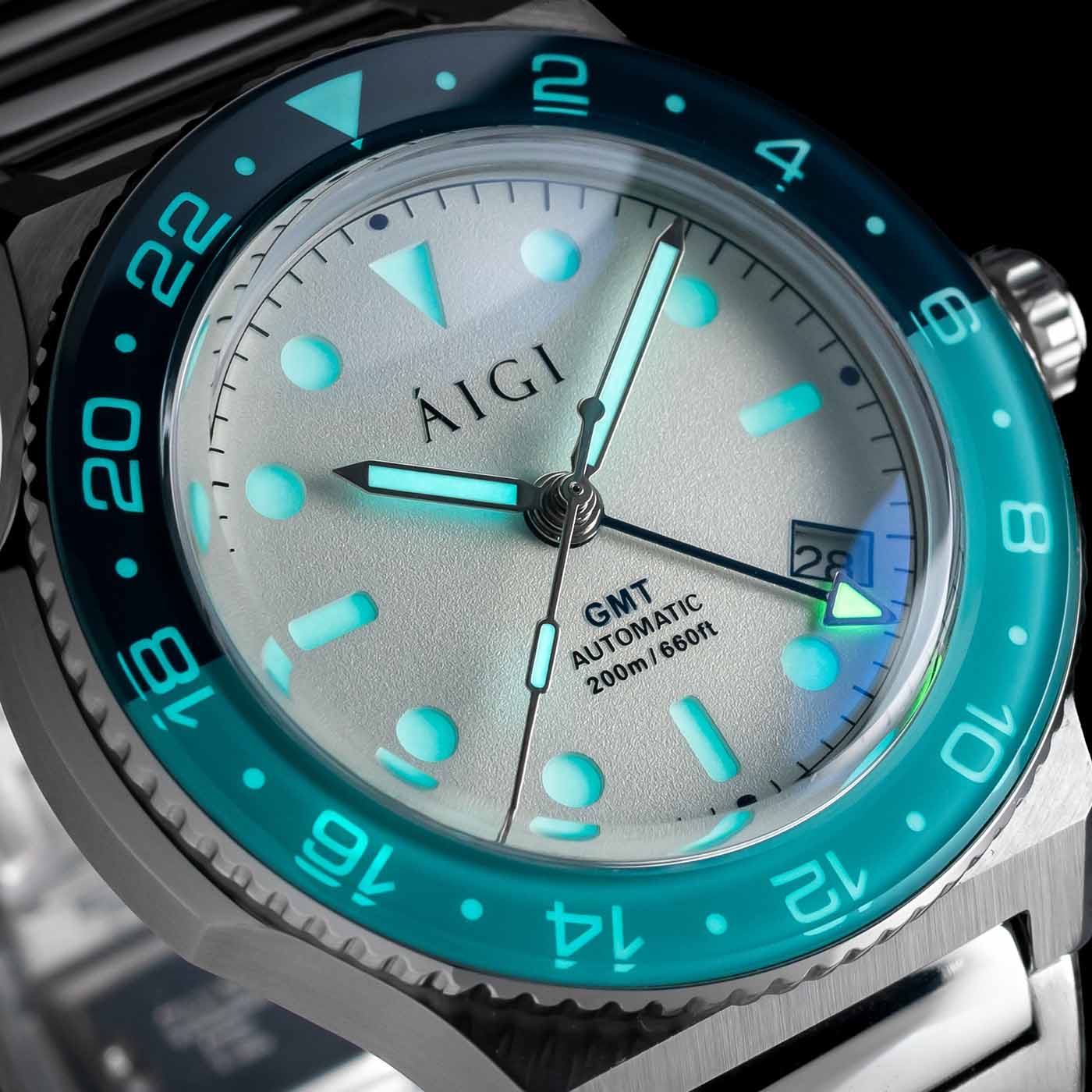
You press the top pusher. The chronograph seconds hand snaps to life — instant, precise. Press again, it stops. Hit the bottom pusher and the hand snaps back to twelve. There's a physical click in the pushers and a satisfying reset.
That's a meca-quartz movement. Not a mechanical chronograph, not a standard quartz timer — something in between that's worth understanding on its own terms.
The Problem That Meca-Quartz Solves
If you've worn watches long enough, you know the trade-off. A mechanical chronograph gives you the full experience — the engineering, the history, the sweeping seconds hand — but it's expensive to build, expensive to service, and requires regular wearing or winding to keep running. A standard quartz chronograph is accurate and low-maintenance, but the timing function often feels secondary. The subdials look static. The pushers don't have the same tactile response.
Meca-quartz addresses this gap directly: quartz-driven timekeeping paired with a cam-actuated chronograph mechanism that gives you physical pushers and snap-back hands.
How a Meca-Quartz Movement Actually Works
A quartz oscillator handles all the timekeeping — the same 32,768 Hz crystal you'd find in any quartz watch. That part is straightforward.
The chronograph function is where meca-quartz diverges. Instead of using purely electronic signals to move the chronograph hands, the movement uses a stepper motor to drive a cam-actuated system. When you press the start pusher, a mechanical cam engages. The chronograph hand begins moving, driven by precise electrical pulses from the quartz circuit. When you press stop and reset, mechanical cams handle the return — that's why the hands snap back cleanly rather than stepping back electronically.
It's a hybrid approach. The timekeeping is entirely quartz. The chronograph actuation borrows from mechanical design principles — cams and levers — but is driven electrically rather than by a wound mainspring. The result is a chronograph that feels tactile and responsive, with the accuracy and battery life of quartz.
The Seiko VK64 — The Most Common Meca-Quartz Caliber
The Seiko VK64 dominates this category. It's a cam-actuated meca-quartz chronograph that Seiko has refined over years of production. You'll find it across a wide range of watch brands, from field watches to sports chronographs.
What makes the VK64 practical for watch designers: it's compact enough to keep case thickness reasonable, it supports a full chronograph layout with subdials, and it's proven reliable across high production volumes. Parts availability is good, and most watchmakers with quartz experience can service it.
There are other meca-quartz calibers — some Ronda movements include similar hybrid chronograph functions — but the VK64 is the one you'll encounter most often.
Why We Chose Meca-Quartz for a Sports Chronograph
When we designed the Arctic Chrono II, the movement choice was deliberate. A mechanical chronograph would have required a significantly thicker case, higher price point, and more frequent servicing — none of which fit what we wanted the watch to be.
The VK64 let us build a chronograph that's wearable daily. The pushers have physical feedback. The reset is clean. And the watch keeps accurate time without needing to be worn or wound regularly. For a sports chronograph designed for actual use, that combination made more sense than either a pure mechanical or a pure electronic approach.
We didn't choose meca-quartz because it was the easiest option. We chose it because it matched the purpose of the watch.
Meca-Quartz vs. the Alternatives
Compared to mechanical chronographs: A fully mechanical chronograph — whether cam-actuated or column wheel — is driven by a wound mainspring. It requires regular service, typically every 4–5 years for the chronograph mechanism. Power reserve is limited. Accuracy drifts over time. The appeal is in the craft itself: the movement, the finishing, the tradition. If that's what you value, mechanical is the right choice. Meca-quartz offers a different set of strengths: consistent accuracy, lower maintenance, and a slimmer profile.
Compared to standard quartz chronographs: A typical quartz chronograph uses electronic stepper motors for everything, including the chronograph hands. It works well, but the interaction is different — the pushers may feel softer, and the hand movement is purely electronic. Meca-quartz adds a physical dimension to the chronograph function through its cam-actuated mechanism. Whether that matters depends on how much you value the feel of using the chronograph.
Compared to automatic chronographs: Automatic chronographs are self-winding mechanical movements with a chronograph complication. They're among the most complex watch movements produced. That complexity is reflected in the price and the service requirements. Meca-quartz is a fundamentally simpler approach to achieving a similar result on the dial.
What Meca-Quartz Isn't
It's worth being clear about what meca-quartz doesn't do. It's not a fully mechanical chronograph — the timekeeping and the energy source are electronic. The sweeping seconds hand you see on a mechanical chronograph (continuous motion at 6 or 8 beats per second) is not present. Meca-quartz chronograph hands tick in one-second increments, driven by the quartz circuit.
The "meca" part refers specifically to the chronograph actuation — the cam system, the pushers, the physical reset. Not to the overall movement architecture. Understanding this distinction helps set realistic expectations.
Practical Ownership
Meca-quartz chronographs are low-maintenance by design. Battery life is typically 2–3 years. When the battery runs low, the chronograph function may stop working before the main timekeeping — that's your signal to get a battery replacement.
The cam mechanism is durable but not invincible. If you use the chronograph frequently over several years, having a watchmaker inspect the chronograph function during a battery change is reasonable. Most VK64 service is straightforward.
For more on how chronographs work in general, our chronograph guide covers the fundamentals. And if you're interested in how quartz movements work beyond the chronograph function, we've written about quartz movement technology separately.
FAQ: Meca-Quartz Movements
Is meca-quartz reliable?
Yes. The quartz timekeeping side is inherently stable — there's no mainspring to fatigue or escapement to regulate. The cam-actuated chronograph mechanism has fewer moving parts than a fully mechanical chronograph, which means less that can go wrong. Service intervals are long, and most issues are limited to battery replacement.
How accurate is a meca-quartz chronograph?
The same accuracy as any quartz watch — typically within a few seconds per month. The chronograph function is driven by the same quartz-controlled pulses, so the timing precision is consistent regardless of how often you use it.
Can you service a meca-quartz movement?
Yes. Any watchmaker experienced with quartz movements can handle battery replacement, which is the most common service. For chronograph-specific issues, you'll want someone familiar with the VK64 caliber. Seiko parts are available through authorized service channels.
Is meca-quartz better than a mechanical chronograph?
They serve different purposes. Meca-quartz is more practical for everyday use — accurate, low-maintenance, affordable. A mechanical chronograph offers a different kind of satisfaction rooted in craft, tradition, and the experience of a fully mechanical system. Neither is objectively better. It depends on what you want from the watch.