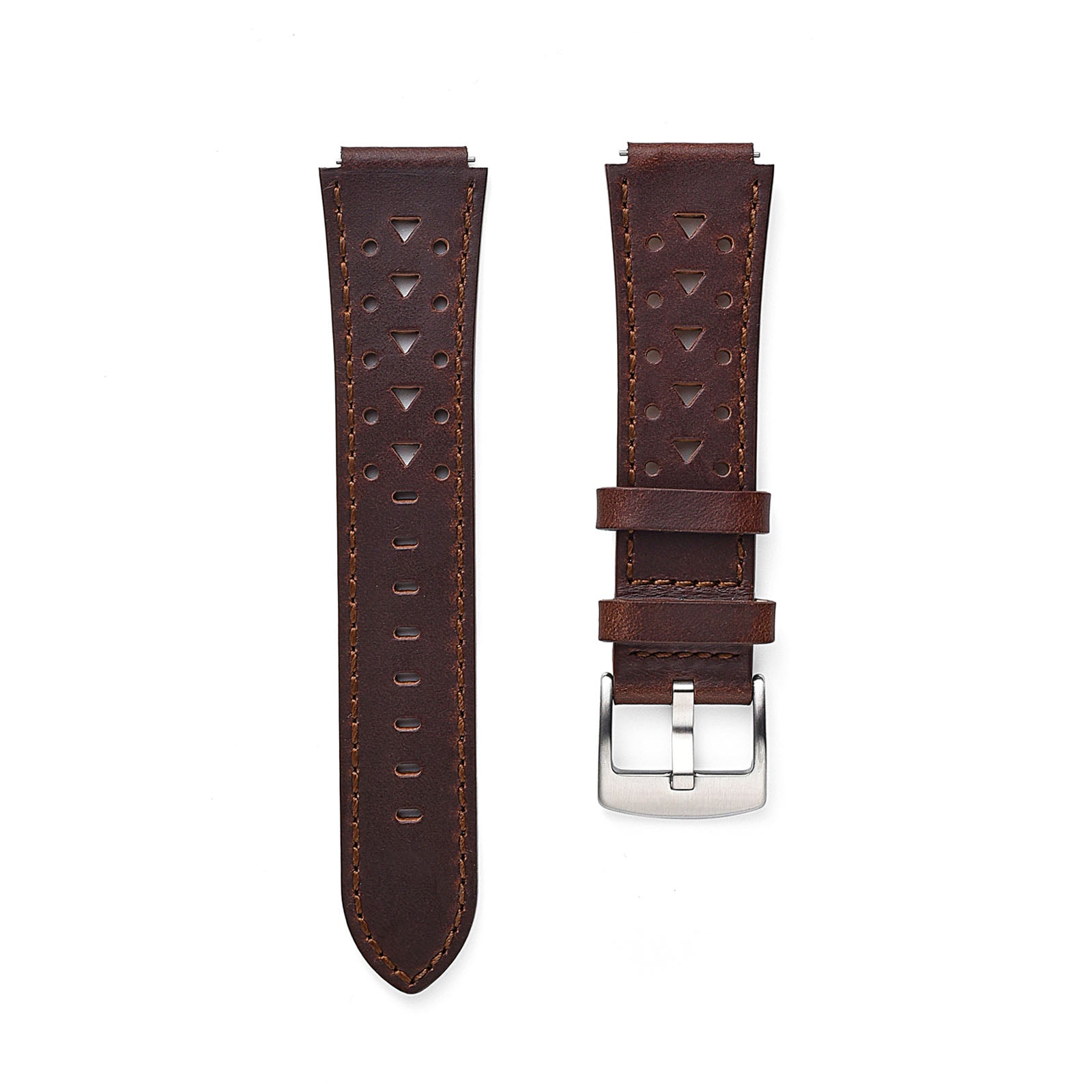
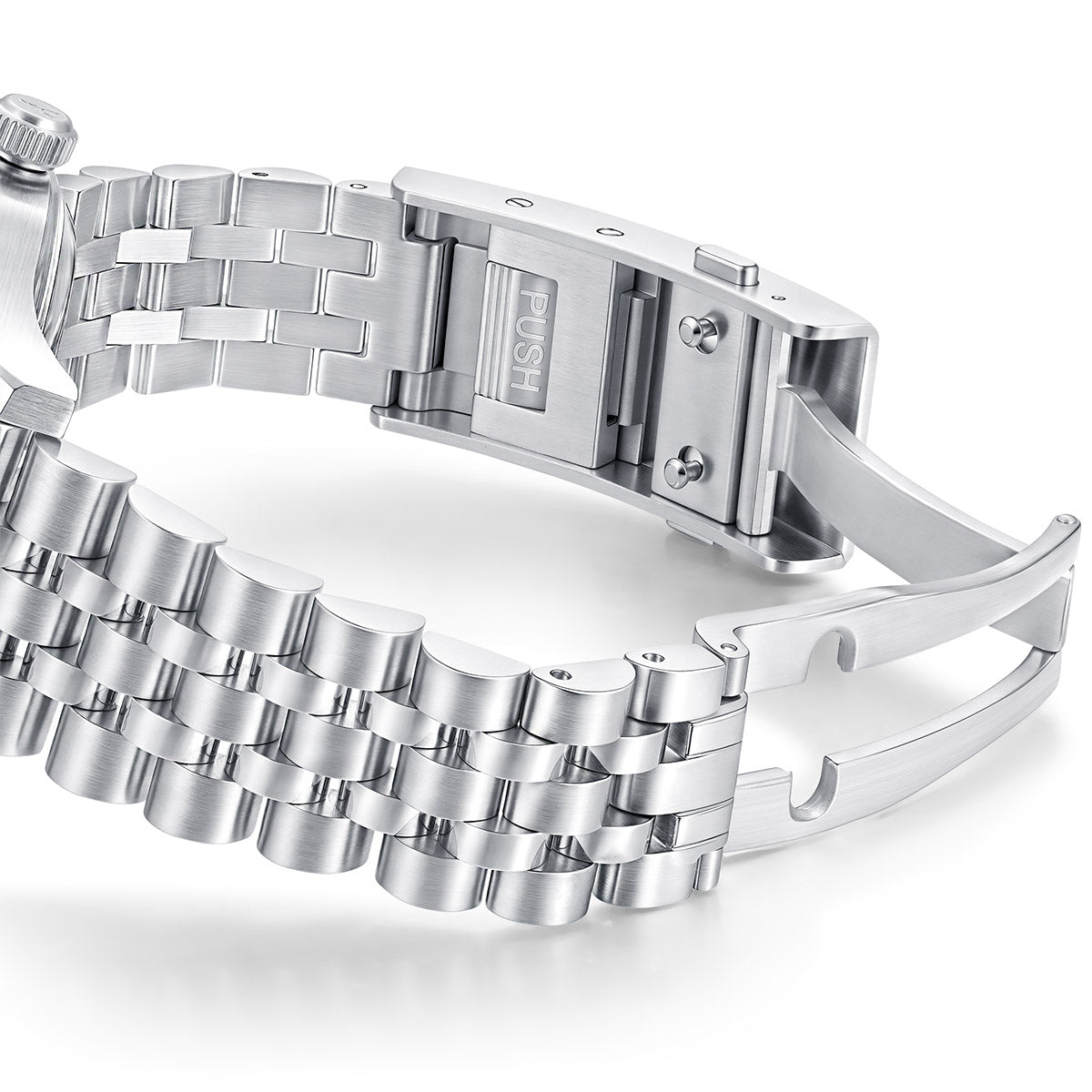
When we were picking the movement for our new 32mm and 38mm last year, we ended up with two options on the table: a well-regarded Japanese quartz from Citizen-Miyota, or a Swiss-made Ronda. We chose the Ronda for one very specific reason — a customer should be able to buy a daily watch from us and not think about the battery for nearly a decade. That single design decision is what this article is about.
Ronda is one of the quieter names in Swiss watchmaking. You won't see it on dial faces the way Sellita and ETA appear, and the brand doesn't market itself to enthusiasts the way some Japanese movement makers do. But Ronda has been producing Swiss quartz movements continuously since 1946, and its calibers sit inside a remarkable range of microbrand and mid-market watches today. Here's what they actually are, how their family lines differ, and why they matter for everyday wear.
What is a Swiss Ronda movement?
Ronda AG is a Swiss movement manufacturer based in Lausen, near Basel, founded in 1946. The company makes both quartz and (more recently) mechanical movements, but its reputation rests almost entirely on its quartz output. To be marked "Swiss Made" on the dial, a movement has to be assembled in Switzerland, with a minimum percentage of its value created there — Ronda meets this threshold on its core production lines.
A Ronda quartz movement works on the same principle as any other quartz watch: a tiny crystal vibrating at 32,768 Hz drives a step motor, which advances the hands. What separates Ronda from generic quartz is the engineering around that base — torque levels, shock resistance, battery efficiency, jewel placement on bearings, and the precision of the gear train. These are the differences that turn a $5 module into a Swiss-quality caliber a microbrand is willing to put behind a sapphire crystal.
The Ronda product families — Normtech, Powertech, Standard
Ronda's catalogue is large enough to feel intimidating at first glance, but it organises into a small number of family lines that share design philosophy.
Standard-tier movements (the everyday workhorses)
These are the volume calibers — reliable, durable, with typical battery life around 45 months under normal use. They sit at the value end of Ronda's catalogue and are the engine behind countless mid-market Swiss-quartz watches you'll see in stores worldwide. Standard-tier Rondas don't try to do anything exotic with the battery interval or the step motor; they just keep running quietly for several years before needing a new cell.
Normtech (long-life series)
Normtech is Ronda's answer to the question "what if the battery just lasted longer?" The Normtech 700 series achieves up to 10-year battery life by changing how the step motor pulses. Instead of advancing the second hand once per second, a Normtech 2-hand movement pulses the minute hand once every 20 seconds, drawing roughly a fifth of the power a conventional quartz draws. In daily use, the practical experience is largely identical — the watch is still accurate within typical quartz tolerances — but the battery cell lasts dramatically longer.
Powertech (high-torque series)
Where Normtech optimises for battery life, Powertech optimises for resilience. The Powertech 500 and 700 lines have higher torque output (which drives larger hands and heavier dials confidently) and improved shock resistance certified to the NIHS 91-10 Swiss standard. The design priority of Powertech is robustness first — long battery life is a separate engineering goal, addressed primarily by the Normtech family.
It's worth noting that the two family names point at primary engineering goals — torque/shock for Powertech, battery interval for Normtech — but each catalogue is large enough that specific calibers should be looked up individually rather than inferred from the family name.
Ronda 762 — the long-life caliber inside ÁIGI dress watches
The caliber we use across in our 32mm womens watch and 38mm mens dress watch is the Ronda 762, a Normtech 700-series movement with a 10-year battery life. We chose it because it answers the most common practical complaint about quartz watches: that the battery dies just when you've started to forget the watch is on the shelf.
Here's what's inside a 762, verified against Ronda's own technical documentation and Caliber Corner's reference notes:
- Layout: 2-hand (hours and minutes only). The 762.4 variant adds a date and a third hand; the base 762 is the deliberately minimal version.
- Battery life: Up to 10 years under normal use, achieved by the slower 20-second step interval.
- Battery cell: Renata R364 (also sold as SR621SW), 1.5V silver oxide.
- Current consumption: 0.23 μA typical, 0.3 μA maximum.
- Frequency: 32,768 Hz.
- Jewels: 4 (gold-plated 762; the 762E is a nickel-plated variant with 1 jewel).
- Dimensions: Approximately 15.30 × 18.1 mm, height 2.50 mm — small enough to sit inside a 32mm case comfortably.
- Instantaneous rate: -10/+20 seconds per month.
For comparison, a typical mid-market Swiss quartz movement with the same dial layout has around 45 months of battery life. The Ronda 762 trades the seconds hand for nearly three times that interval — a sensible swap on a dress watch where the seconds hand is rarely the design priority anyway.
Ronda vs. ETA, Sellita, and Japanese quartz
The Swiss quartz space is small enough that comparisons are useful.
ETA still produces quartz movements (the Normline, Flatline, Trendline, and Thermoline families — note that ETA's mechanical line is called Mecaline, which is unrelated to its quartz output). ETA's high-accuracy quartz movements like the Thermoline 955.652 are thermocompensated and reach ±10 seconds per year — significantly more accurate than standard quartz. ETA quartz is rarely available to small brands today due to Swatch Group's distribution policies.
Sellita is primarily known for mechanical movements (the SW200-1 is the standard Swiss automatic benchmark for microbrands), but does have a small quartz line. It's less common at this price point.
Japanese quartz — from Citizen-Miyota or Seiko Instruments — covers the entry tier. The Miyota 2115 family runs at typical 2-4 year battery intervals and is the workhorse behind countless affordable watches worldwide. Japanese quartz is excellent value, but lacks the "Swiss Made" designation that many buyers specifically look for in a dress watch.
The Ronda 762's appeal is that it sits in a narrow gap: Swiss-made, long battery life, dimensionally compact, and priced for microbrand use. For a 32mm or 38mm dress piece, that combination is hard to find elsewhere.
What about accuracy?
Standard Ronda quartz movements run at roughly -10/+20 seconds per month — a typical figure for non-thermocompensated quartz. Over a year, that translates to about 2-4 minutes of drift, which is well within most people's tolerance.
If you want substantially better accuracy, you have to step up to High-Accuracy Quartz (HAQ). Citizen's Caliber 0100 achieves ±1 second per year. The Citizen Chronomaster (Caliber A010 and A660) achieves ±5 seconds per year. ETA's Thermoline runs at about ±10 seconds per year. These are different engineering categories and command different prices. The Ronda 762 isn't an HAQ caliber, but for a watch you reset twice a year for daylight saving anyway, the standard -10/+20 per month is more than enough.
Service and battery replacement
A Ronda quartz movement is designed to be a sealed, low-service component. The most common service event is battery replacement, which happens every 4-10 years depending on which variant you have. The job is straightforward — any competent watchmaker can do it in a few minutes — and on a Ronda 762, it costs about the same as on any standard quartz.
One thing to watch for: when the battery is changed, the gasket on the case back should be inspected or replaced. Old gaskets dry out and lose their seal, which is the most common cause of water entry on quartz watches that have otherwise lived perfectly clean lives.
If the movement itself fails — which is rare, but happens — Ronda calibers are typically replaced rather than repaired at the component level. Modules cost less than the labor to disassemble them. This is standard practice across the quartz industry.
Where Ronda sits in the ÁIGI collection
We use the Ronda 762 across our 32mm and 38mm models specifically because the design priority on those watches is long-term wearability without fuss. They're the kind of watch a customer might leave in a drawer for several months and then pick up again, expecting it to just work. The 10-year battery is what makes that scenario realistic.
For automatic and chronograph models, we use different calibers tailored to the specific design — the Sellita SW200-1 in Gruvebus, the Seiko NH34A in Arctic GMT, the Miyota 9039 in SGS II, and the Seiko VK64 mecha-quartz in Arctic Chrono II. The choice of movement is one of the first design decisions on any new ÁIGI model, and it tends to drive a lot of the rest.
Summary
Swiss Ronda movements are the quiet engine behind a lot of well-made affordable Swiss quartz watches — including ours. The Normtech family prioritises battery life (up to 10 years on the Ronda 762), Powertech prioritises torque and shock resistance, and the standard 500/700 lines deliver reliable everyday performance for a fraction of the price of an automatic. None of them are exciting in the way a mechanical movement is, but they do the one thing a quartz watch is supposed to do: stay accurate and out of the way for a long time. For a quartz watch you want to forget about until you reach for it, that's exactly the point.
For more on how Swiss quartz fits into the broader watch landscape, you might find our guide to Swiss quartz movements and our explanation of Swiss Parts vs. Swiss Made useful next reads.
Frequently Asked Questions
How long does a Ronda 762 battery last?
Up to 10 years under normal use. The 762 is part of Ronda's Normtech 700 series, which achieves long battery life by pulsing the step motor every 20 seconds instead of every second. The battery cell is a Renata R364 (also known as SR621SW), a 1.5V silver oxide cell that draws only 0.23 microamps in typical operation. Do not apply the generic "2-4 year quartz battery" rule to a Ronda 762 — it's designed specifically for the long interval.
What's the difference between Ronda Normtech and Powertech?
Normtech is engineered for long battery life via a slower step motor — the Ronda 762 is the flagship 10-year example. Powertech is engineered for higher torque and improved shock resistance, certified to the NIHS 91-10 Swiss standard. The two families address different engineering goals, and specific calibers should be looked up individually rather than inferred from the family name.
Is a Ronda quartz movement Swiss Made?
Yes. Ronda AG is based in Lausen, Switzerland, and its core production lines are assembled in Switzerland to meet the "Swiss Made" standard. The standard requires a minimum percentage of the movement's value to be created in Switzerland, in addition to final assembly. Watches with Ronda calibers that meet this threshold can carry the "Swiss Made" mark on the dial.
How accurate is a Ronda quartz movement?
A standard Ronda quartz movement runs at approximately -10/+20 seconds per month, which is typical for non-thermocompensated quartz. Over a year, this works out to roughly ±2-4 minutes of drift. Higher accuracy requires a High-Accuracy Quartz (HAQ) caliber, such as the Citizen Chronomaster (±5 seconds per year) or Citizen Caliber 0100 (±1 second per year) — Ronda doesn't currently produce an HAQ-class movement.
Which ÁIGI watches use a Ronda movement?
We use the Ronda 762 across our 32mm and 38mm dameklokke models. The decision was driven by the 10-year battery life, which fits the everyday-and-occasional-wear pattern these watches are designed for. Our automatic and chronograph models use different calibers tailored to their design — Sellita SW200-1 in Gruvebus, Seiko NH34A in Arctic GMT, Miyota 9039 in SGS II, and Seiko VK64 in Arctic Chrono II.