Most watches are built for the masses — same dial, same case, thousands of identical wrists. A custom watch is the opposite idea: a piece built around a specific group, occasion, or identity. We get these requests regularly — a company marking an anniversary, a squadron commemorating service, a club wanting something unmistakably theirs — and the questions are almost always the same. So here is a plain explanation of what you can actually customise, how a bespoke project runs from first sketch to delivered watch, and a few we have built.
What can you actually customise on a watch?
More than people expect, but not literally everything. Our working rule is simple: everything outside the glass stays recognisably an ÁIGI unless we agree otherwise — the watch should always feel like a real timepiece, not a new product built around a logo. Within that, the elements we personalise are:
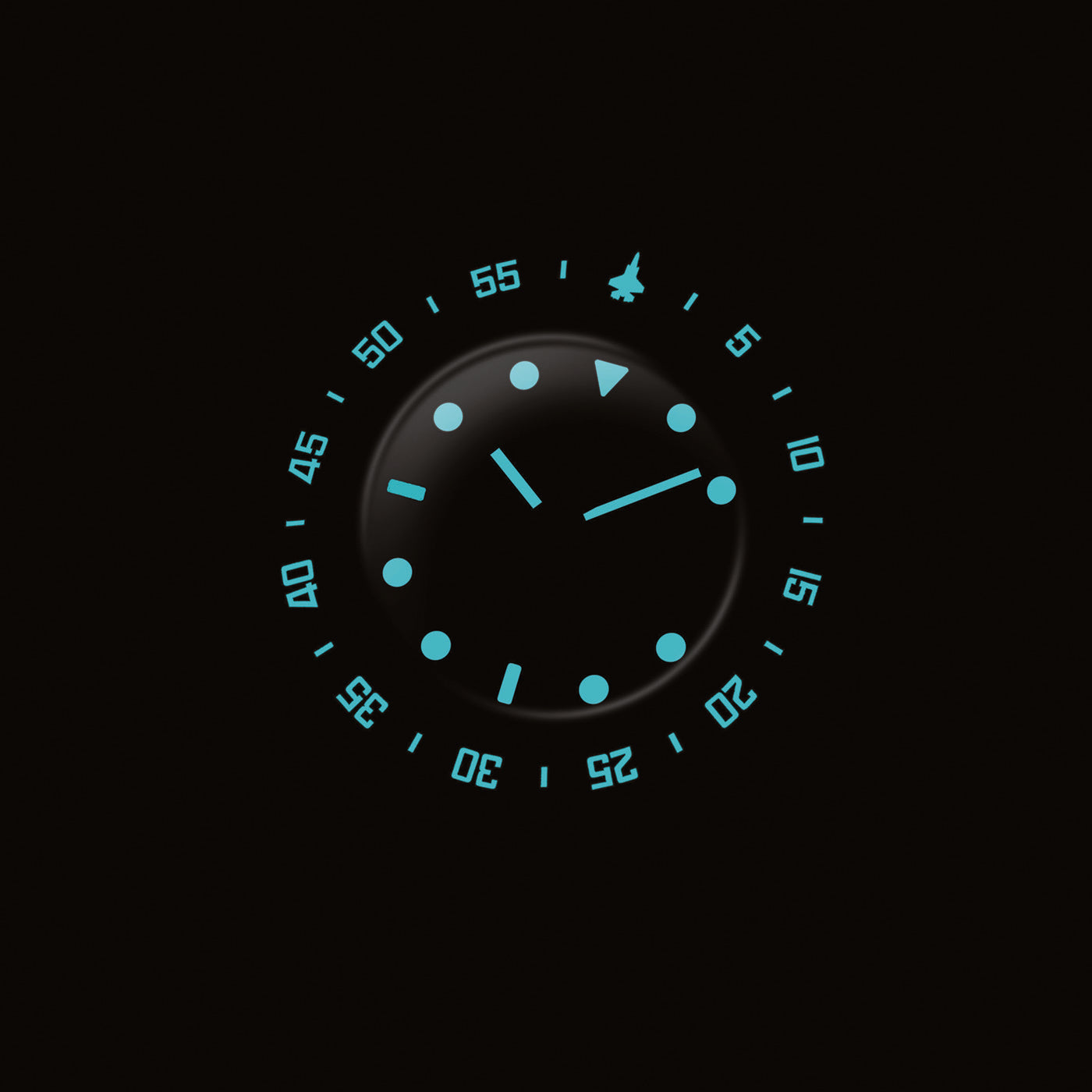
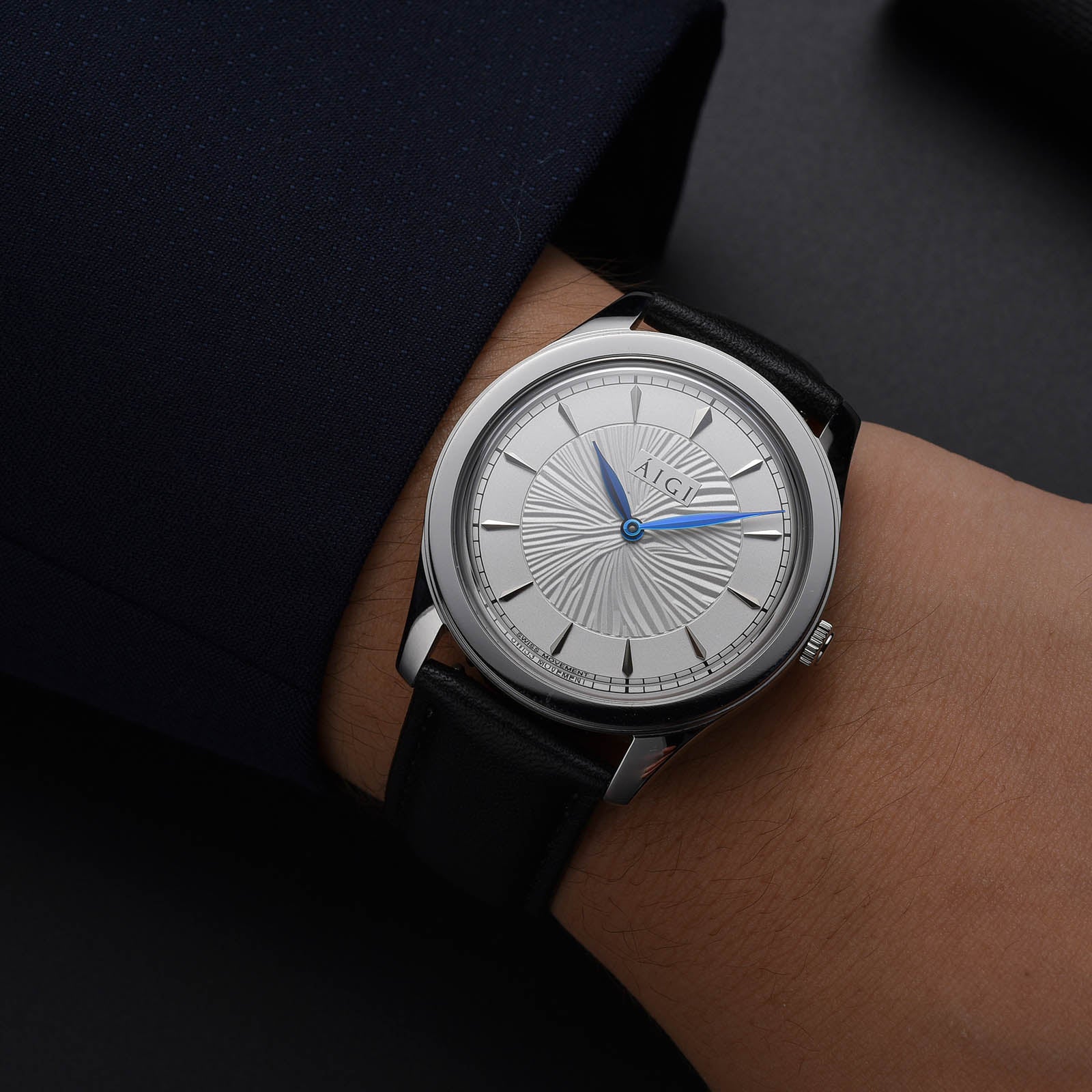
- Dial — colour and finish (matte, sunburst, sandwich, texture), an emblem or crest, indices, and text such as a name, motto, or number. The dial can even carry a material: for our Gruvebus, real coal from a Svalbard mine is set into the dial.
- Bezel insert — ceramic in most colours, with markings, numbers, or a unit emblem.
- Hands — custom shapes (we have made a missile-shaped second hand) and colour or lume choices.
- Hour markers — applied or printed, with special marking at specific positions.
- Caseback — engraving, a relief design, individual numbering, and edition information.
- Crown — a custom shape, or even a material with a story: for the KSAT project, the crown was made from steel taken from their station in Antarctica.
- Rotor (visible through a display caseback) — engraved with a callsign or personal detail.
What we are careful about is honesty: a custom dial and an engraved caseback genuinely change the character of a watch, but we will not promise structural changes that compromise quality or water resistance. In our experience, the most successful custom watches are restrained — one or two meaningful touches on a fundamentally well-built watch, not everything customised at once.
Custom, bespoke, personalised — what's the difference?
People use these words interchangeably, and that is fine, but there is a rough spectrum. Personalised usually means an existing watch with an engraving or small touch added. Custom means a watch built to your specification — your dial, your details — typically as a limited run for a group. Bespoke implies the most design-led end of that scale. What matters is not the label but what you want changed and how many you need.
How a custom watch project works, step by step
- The brief. You tell us the purpose — the occasion, the group, the feeling — and bring any artwork (a crest, logo, or sketch). The best briefs start with why, not specs.
- Design. We translate that into a dial and caseback concept, choosing a base model and movement that fit the purpose and budget, and integrating your identity elegantly rather than plastering it on.
- Approval. You review and refine before anything is produced. Where a design uses official logos, insignia, or heraldry, that artwork needs sign-off from the rights holder first.
- Production and delivery. Once approved, the limited run is produced and delivered, typically individually numbered.
You will notice we have not quoted minimum quantities, lead times, or exact prices. That is deliberate — custom runs are usually limited editions for a group, and the specifics genuinely depend on what you are making and how many. Rather than publish numbers that may not apply, we would rather work them out with you.
Real examples: identity you can hold
The thread through our favourite projects is that the watch tells a true story, often through materials and design rather than a printed logo:
- Technology — the KSAT satellite-ground-station watch, with a dial inspired by a radome pattern and a crown forged from steel that spent years at a station in Antarctica.
- Military — an F-35 piece for the Royal Danish Air Force, and the USAF 52nd Fighter Squadron "Banzai" watch with a missile-shaped second hand and a callsign-engraved rotor.
- Maritime / anniversary — a 199-piece limited series marking the 150th anniversary of the Royal Norwegian Navy's MTB Skjold class.
- Industrial / heritage — our own Gruvebus, with real coal from a Svalbard mine set into the dial.
Corporate and unit watches
A large share of custom work is for organisations: companies marking milestones, units commemorating service, clubs building identity. A well-made watch is a rare corporate gift — it is genuinely worn, often for years, rather than left in a drawer. If that is your use case, our corporate watches page is the right starting point, and our custom watches page covers the broader process.
What to think about before you start
Three things save time later. Know your purpose — a clear "why" makes every design decision easier. Have your artwork ready in a usable format, and remember protected insignia may need rights-holder approval. Be realistic about restraint — the watches people still wear years later are usually the understated ones. For a broader primer, see our custom watches buyer's guide.
Summary
A custom watch is built around an identity rather than a market. You can personalise the dial, bezel, hands, caseback, crown, and rotor through a collaborative process from brief to delivery — and at its best, the watch carries a real story, sometimes literally in its materials. The specifics depend on your project, which is exactly why we prefer to work them out with you. As a Norwegian brand designing and developing in Norway, building watches that mean something to a specific group is some of the work we enjoy most.
Frequently Asked Questions
What can you customise on a watch?
The dial (colour, finish, emblem, text, even an embedded material), the bezel insert, the hands, the hour markers, the caseback (engraving, relief, individual numbering), the crown, and the rotor. We keep everything outside the glass recognisably ÁIGI unless agreed otherwise, and avoid changes that would compromise build quality or water resistance.
What is the difference between custom, bespoke, and personalised watches?
Personalised usually means an existing watch with an engraving or small touch added. Custom means a watch built to your specification, typically as a limited run for a group. Bespoke implies the most design-led, involved end of that scale. The right term depends on what you want changed and how many you need.
How many watches do I need to order for a custom project?
It depends on the project, so we work it out with you rather than publishing a fixed minimum. Custom runs are usually limited editions made for a group — a company, unit, club, or association — and are often individually numbered. Get in touch through our custom watches page with your purpose and quantity in mind, and we will advise on what is feasible.
Are custom watches a good corporate gift?
Yes — a well-made watch is one of the few corporate gifts that gets genuinely worn, often for years, rather than set aside. A custom dial or an engraved caseback ties it to the occasion or organisation. Our corporate watches page is the place to start for company projects.