When we chose the movement for our slim 38mm dress watches, accuracy was the easy part. Every decent quartz movement keeps excellent time. The real questions were how long the battery should last, how thin the case could be, and whether the watch would still feel worth wearing in ten years. That is the honest way to shop for quartz watches for men: not "which one is accurate", but which compromises you actually care about.
This guide explains what separates a good quartz watch from a forgettable one, where meca-quartz chronographs fit in, and what to check before you buy.
Why are quartz watches so accurate?
A quartz movement counts the vibrations of a tiny quartz crystal that oscillates at 32,768 times per second (32,768 Hz). A circuit divides that frequency down to one pulse per second, which drives a small stepping motor and the hands. Because the crystal's frequency is so stable, standard quartz movements are typically rated within about ±15 to ±20 seconds per month at normal temperatures.
A mechanical watch is a different kind of object. Its accuracy is measured in seconds per day, and it depends on position, temperature and how fully the mainspring is wound. We have written about the real-world numbers in how accurate automatic watches are. Neither is "better". A quartz watch is the more precise instrument; a mechanical watch is a small machine some people simply enjoy owning.
If you want the full technical picture, our guide to how a quartz watch works goes inside the movement step by step.
What actually differs between quartz movements?
Since accuracy is broadly similar across decent movements, the differences that matter are elsewhere.
Battery life
Most quartz batteries last a few years, roughly two to five depending on the movement and its functions. Some calibers go much further. The Swiss Ronda 762, a two-hand movement from Ronda's Normtech 700 series, is rated for a battery life of 10 years. That is a different ownership experience: you open the case far less often.
Hands and functions
Two-hand, three-hand, date, chronograph: every added function uses a little more energy and adds a little thickness. A two-hand dress watch can be remarkably slim. A chronograph will always be thicker.
Swiss or Japanese
Both make excellent quartz movements. Swiss calibers from makers like Ronda are common in dress watches; Japanese movements from Seiko and Citizen-Miyota are everywhere from entry level to robust tool watches. In our experience the practical difference on the wrist is smaller than the marketing suggests. What matters more is how well the rest of the watch is built. Our guide to Swiss Ronda movements covers the Swiss side in more detail.
What is a meca-quartz chronograph?
A meca-quartz (also written mecha-quartz) movement keeps time with quartz but runs the chronograph through a mechanical module. The best-known example is the Seiko VK64. Timekeeping is quartz-regulated, while the chronograph runs on a separate mechanical module. What you feel is the reason people like it: tactile pushers and chronograph hands that snap back to zero when you reset.
On paper the VK64 is a practical design. Seiko's specification lists a 60-minute chronograph counter, a 24-hour indicator, a date, chronograph timing to 1/5 of a second, and an accuracy of ±20 seconds per month. The battery, an SR936SW silver-oxide cell, is rated for about three years. Heavy chronograph use shortens that.
It is still a quartz watch. It does not have a mechanical escapement, and it should not be described as one. We think that is fine. You get the chronograph experience without the thickness and service cost of a fully mechanical chronograph. More on the details in our article what is a meca-quartz movement.
How to choose a good quartz watch
A quartz movement is rarely the weak point. The case, crystal and strap usually are. These are the things we check first.
- Crystal. Sapphire crystal sits at 9 on the Mohs hardness scale and is clearly harder than mineral glass. On a watch you wear every day, it is the single biggest upgrade.
- Case material. 316L stainless steel is the standard for good reason: it resists corrosion and wears well.
- Water resistance. A 5 ATM (50 m) rating is a static pressure test, not a diving depth. It covers rain, hand washing and a short swim. For regular swimming, look for more and a screw-down crown.
- Strap changes. Quick-release spring bars let you swap straps by hand with a small lever, while standard spring bars need a tool.
- Size. Quartz movements are compact, so quartz watches are often slimmer. That makes smaller sizes wear especially well. Our 38mm watch size guide helps you check fit before buying.
One practical note: a quartz watch still needs a little care. Every battery change means opening the case, and a good watchmaker will check the gaskets at the same time. We see far more problems from a carelessly closed caseback than from the movement itself.
Where our quartz watches fit
We use quartz where it suits the purpose of the watch. Our Arctic Chrono II is built around the Seiko VK64. We chose it because we wanted a chronograph you can wear daily, with tactile pushers and a snap-back reset, in a 40.5mm steel case that is 12mm thick. It has a sapphire crystal, a screw-down crown, 10 ATM water resistance and Swiss Super-LumiNova BGW9 on the hands and hour markers.
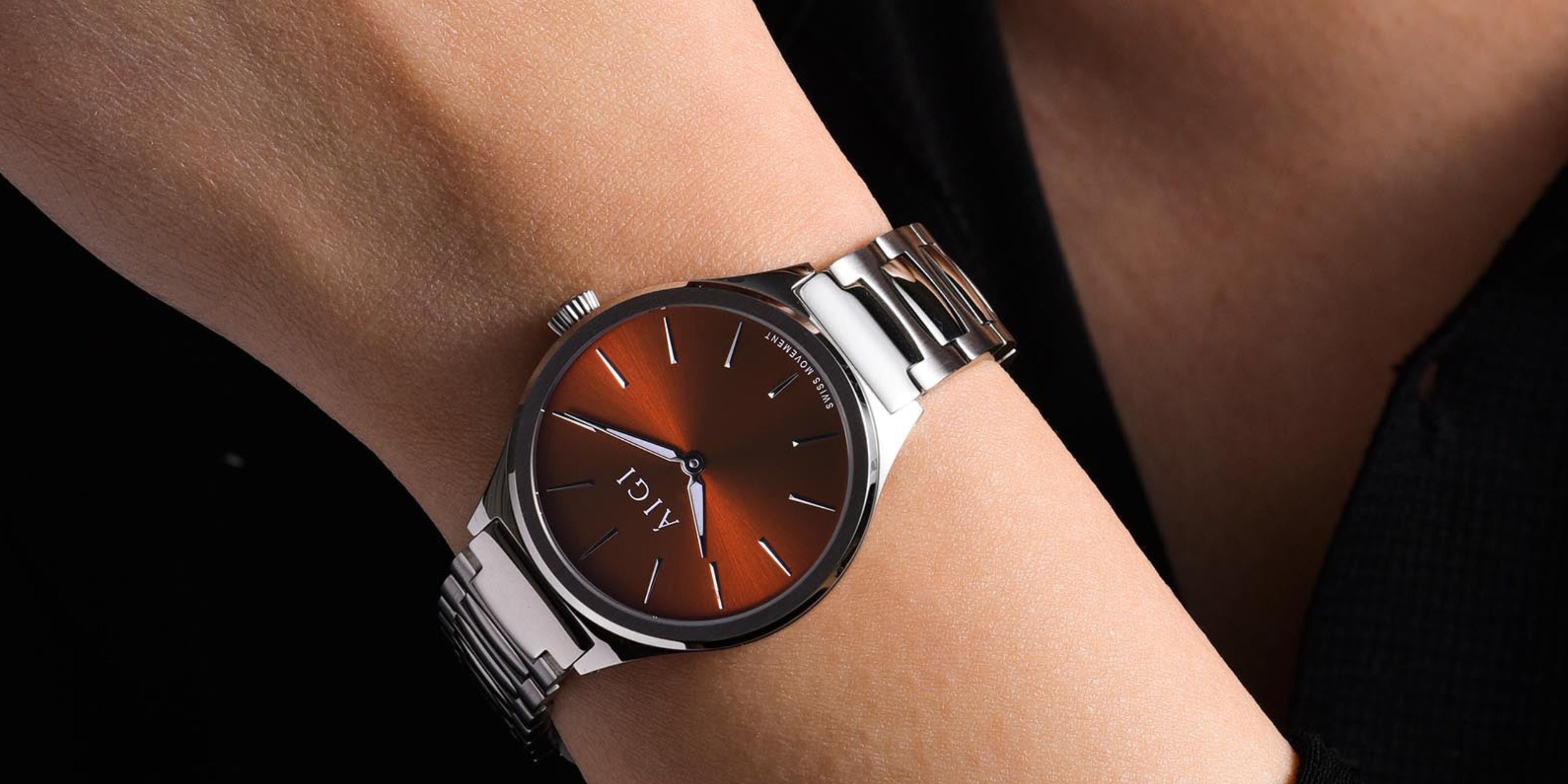
Our 38mm Aurora and Midnattsol dress watches use the Swiss Ronda 762. With a case just 6.6mm thick (8.7mm including the domed sapphire crystal), they sit flat under a shirt cuff, and the 10-year battery rating means you rarely think about the movement at all. You will find both among our men's watches.
Summary
- Quartz movements are inherently accurate, typically within about ±15 to ±20 seconds per month.
- The real differences are battery life, functions, thickness and build quality.
- Meca-quartz chronographs like the VK64 give you a mechanical-feeling chronograph with quartz timekeeping.
- Prioritise sapphire crystal, a 316L steel case, honest water resistance and a strap system you can live with.
Frequently Asked Questions
Are quartz watches for men worth buying in 2026?
Yes, if you value accuracy, low running costs and a slimmer case. A well-built quartz watch with a sapphire crystal and a steel case will last many years. The movement is rarely the limiting factor; the quality of the case, crystal and gaskets matters more.
How long does a quartz watch battery last?
Most last roughly two to five years, depending on the movement and its functions. Chronographs tend to drain batteries faster, and the Seiko VK64 is rated for about three years. Long-life calibers such as the Swiss Ronda 762 are rated for up to 10 years.
Is a meca-quartz chronograph better than a mechanical one?
It is different rather than better. A meca-quartz chronograph keeps quartz accuracy and is typically thinner and cheaper to maintain, while still offering tactile pushers and a snap-back reset. A mechanical chronograph offers traditional craftsmanship but is usually thicker, more expensive and needs regular servicing.
Do quartz watches need servicing?
Less than mechanical watches, but not never. Each battery change involves opening the case, so the gaskets should be checked or replaced to keep the watch water resistant. If a quartz watch starts losing time or stops soon after a battery change, have a watchmaker inspect it.
Which quartz movement do ÁIGI watches use?
It depends on the model. The Arctic Chrono II uses the Seiko VK64 meca-quartz chronograph movement, and our 38mm Aurora and Midnattsol dress watches use the Swiss Ronda 762 with a 10-year battery rating. We design our watches in Norway and choose each movement to match what the watch is for.